
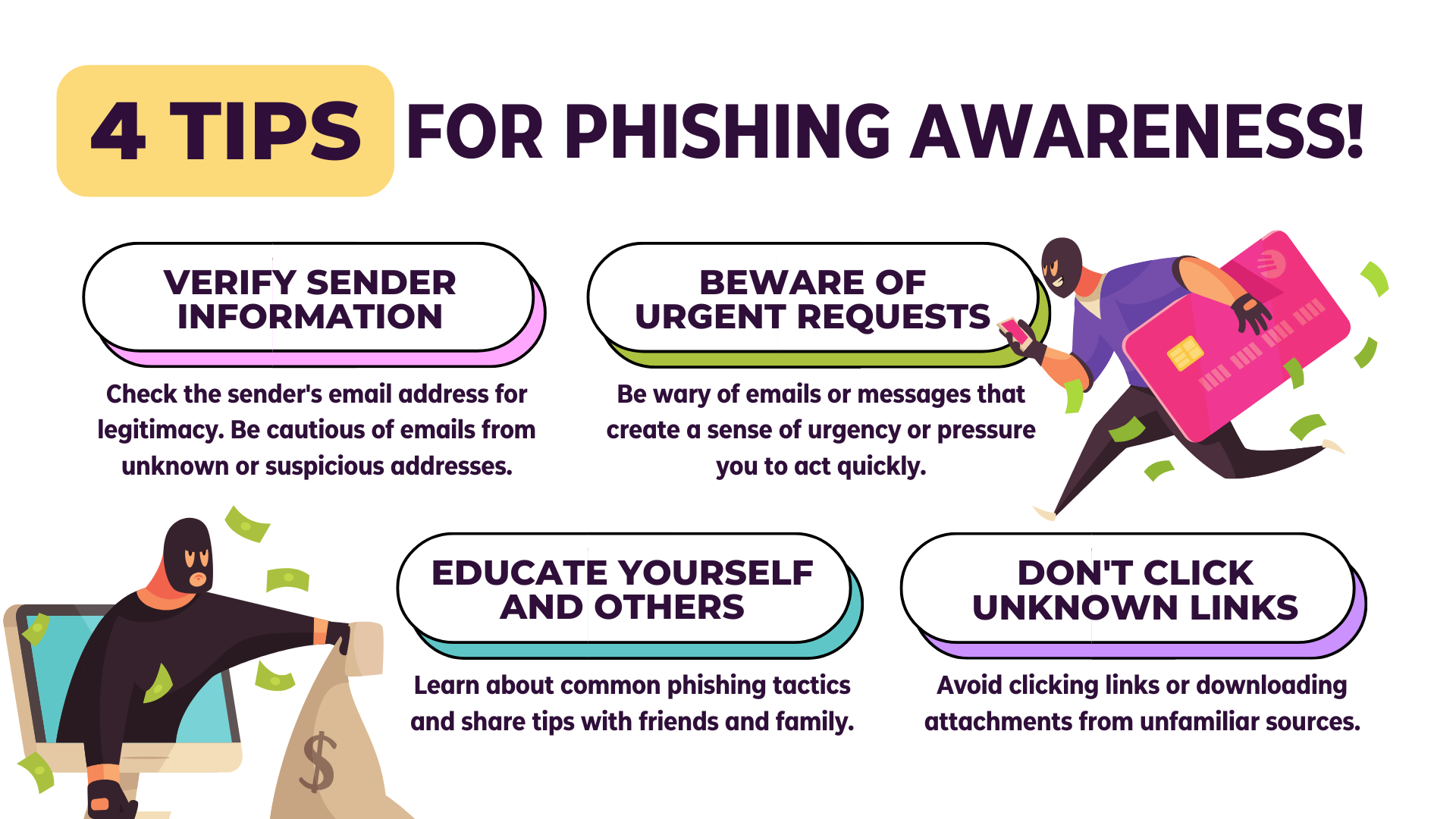
Phishing scams are designed to look legitimate while pressuring you to act quickly—click a link, share personal information, or download an attachment. These messages often come by email, text, or even phone call, and they can target anyone. Use the tips below to help protect yourself and those around you.
Verify Sender Information
Always take a moment to check who a message is really from. Look closely at the sender’s email address or phone number—scammers often use addresses that look almost right but include extra letters, numbers, or misspellings. When in doubt, contact the sender through a trusted method rather than replying directly.
Beware of Urgent Requests
Phishing messages frequently create a sense of urgency: “Act now,” “Your account will be locked,” or “Immediate response required.” Pressure is a red flag. Legitimate organizations rarely demand immediate action without giving you time to verify.
Educate Yourself and Others
Scammers constantly change their tactics. Staying informed about common phishing methods helps you recognize suspicious messages more quickly. Sharing what you learn with friends, family, and coworkers strengthens everyone’s ability to stay safe.
Don’t Click Unknown Links
Avoid clicking links or downloading attachments from unfamiliar or unexpected sources—even if the message appears official. If you need to access an account, open a new browser window and go directly to the organization’s official website instead.
When in Doubt
If something feels off, trust your instincts. It’s always better to pause, verify, and ask for help than to act quickly and regret it later.
Staying alert is one of the simplest ways to protect your personal information—and your peace of mind.